


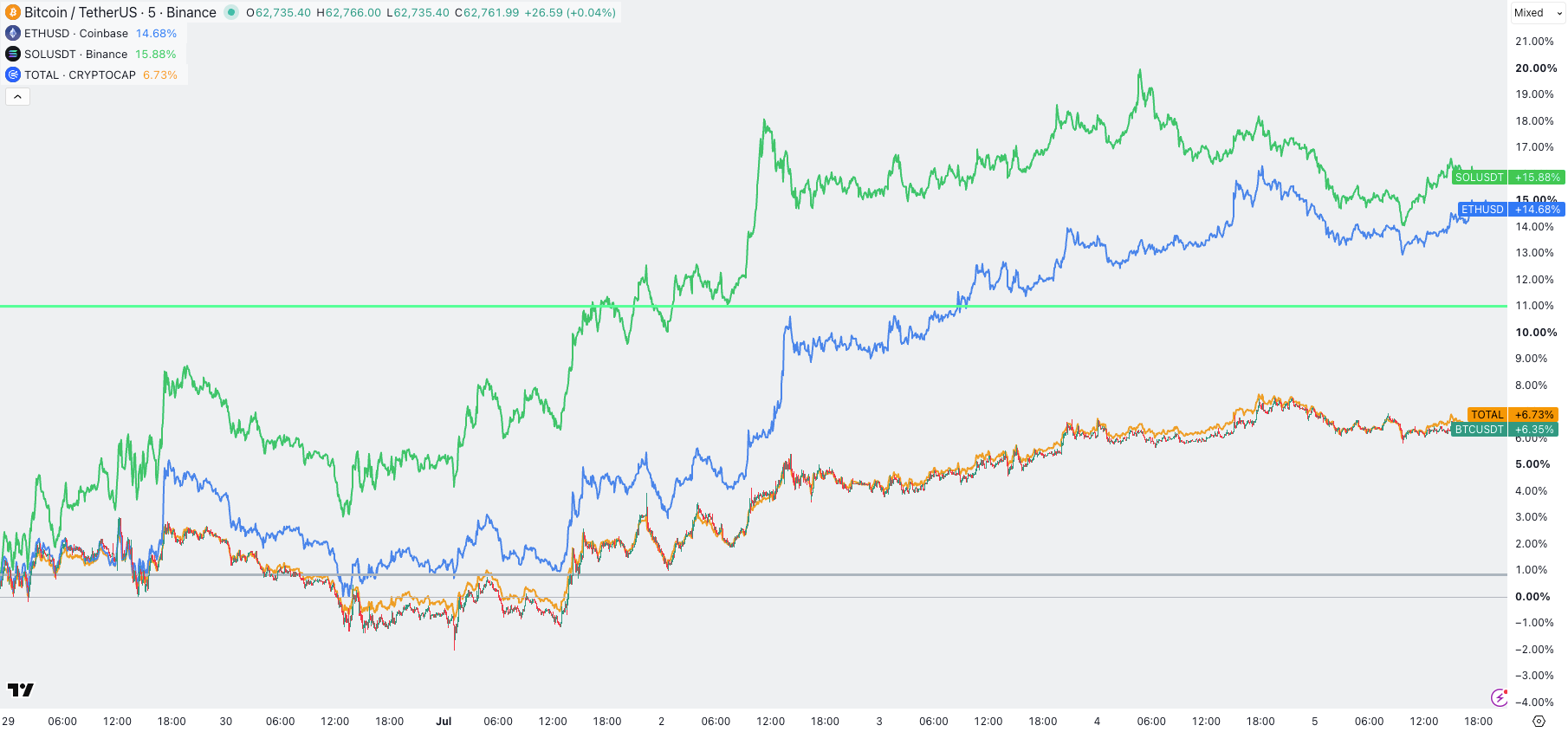
Crypto’s tone improved meaningfully this week, helped by a softer macro pulse and a wobble in AI leadership that gave oversold risk assets room to breathe. After weeks of forced selling, weak ETF demand, and increasingly defensive positioning, BTC, ETH, and SOL finally staged a proper relief rally. But the question is whether the buyer base has actually repaired, or whether this was simply what oversold markets do when macro pressure eases, crowded leadership cracks, and shorts get squeezed.
Crypto
What changed this week was price. What has not yet clearly changed is sponsorship. The ETF complex still tells a story of institutional hesitation. June was the worst month on record for U.S. spot bitcoin ETF flows, with about $4.06bn in outflows, enough to push the category negative for 2026 as a whole before a $221.7m inflow on Thursday, 2 July, broke a 10-day outflow streak. Even after that bounce, the message remains the same: one green day is not a repaired buyer base. The market still needs repeatable absorption, not just a reflex rally.
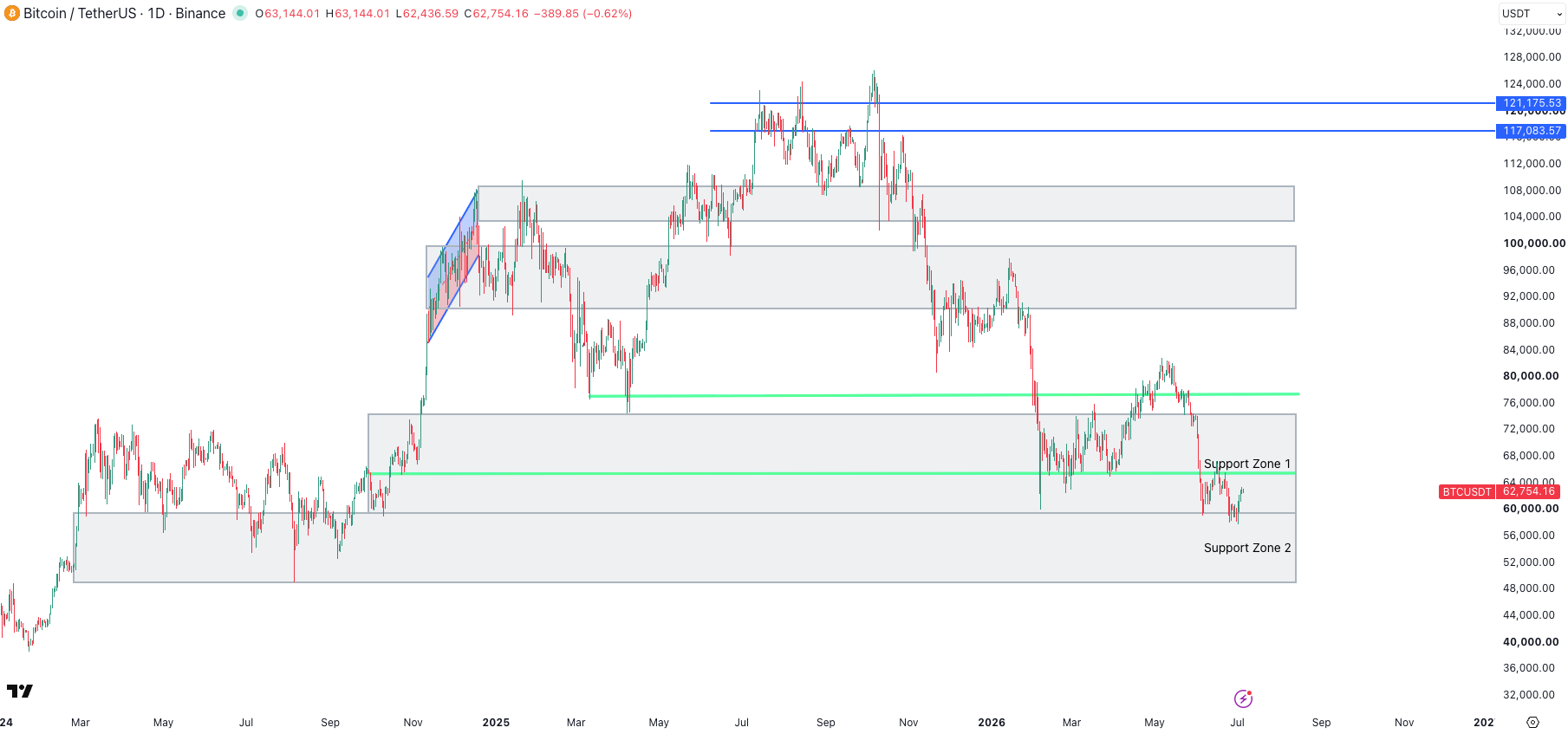
That is why the tone should stay cautious even though the tape looks better. Price responded to a softer macro pulse, lighter positioning, and a short squeeze. But durable lows in crypto tend to be built on one of two foundations: either macro conditions are moving meaningfully easier, or flows return and prove that institutions have decided the washout is over. At the moment, we have the beginnings of the first and only a hint of the second. A market can rally hard under those conditions, but it is still vulnerable to disappointment.
The Strategy overhang also remains central. The company’s enterprise value fell below the value of its bitcoin holdings for the first time, with its mNAV ratio slipping to 0.99. That is important because the market is no longer valuing Strategy as a simple perpetual premium vehicle on top of bitcoin. It is questioning the durability of the structure itself. Strategy also announced a share repurchase programme, and authorised up to $1.25bn in bitcoin sales to build a liquidity cushion. Whether or not a larger liquidation ever happens, the market now has to price the possibility that liquidity management takes precedence over relentless BTC accumulation.
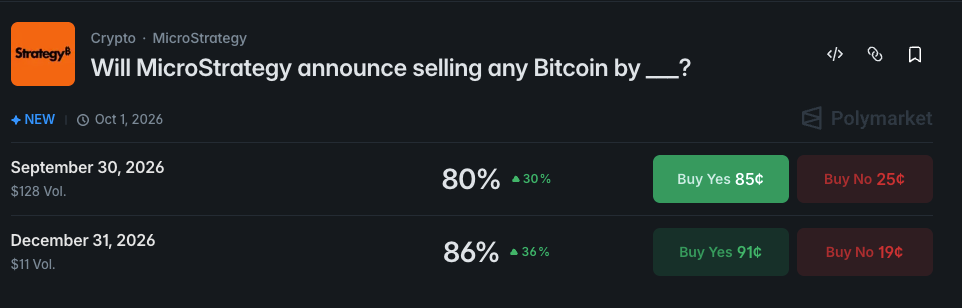
That overhang is why this still feels more like a low-building process than a completed low. The cleaner bullish read is that a real reset is happening underneath the surface. CoinDesk reported that wallets holding large balances accumulated more than 270,000 BTC, roughly $16.7bn, over the past two weeks even as ETF demand remained deeply negative. That kind of split, non-native institutional flows selling while larger, longer-duration holders absorb supply, is exactly the sort of divergence that often appears close to important lows. Looking at the Supply in profit (%) for BTC, we hit the first time loss-making supply has overtaken profitable in this cycle.
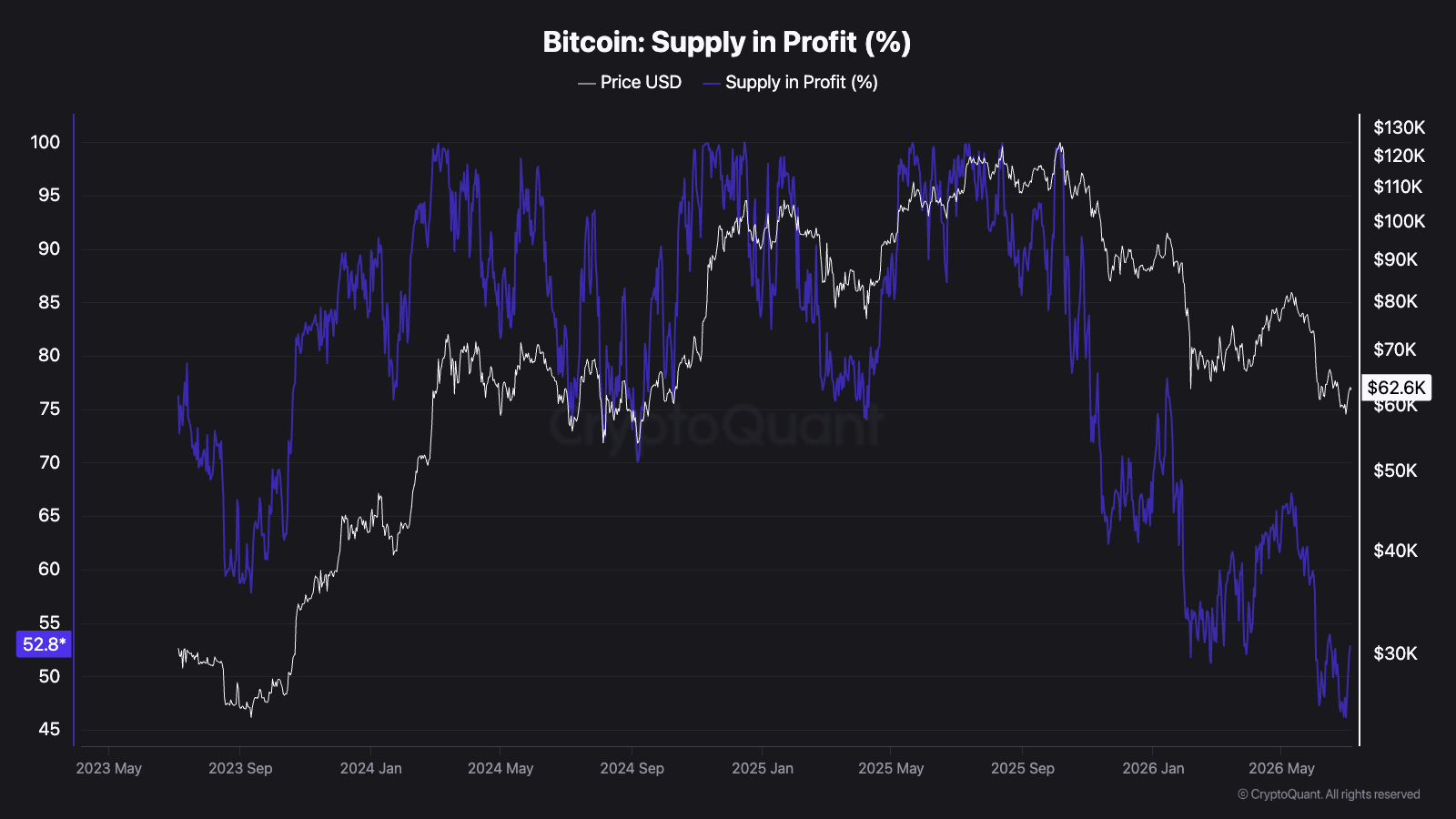
That does not prove the bottom is in, but it does say stress is becoming real enough to matter.
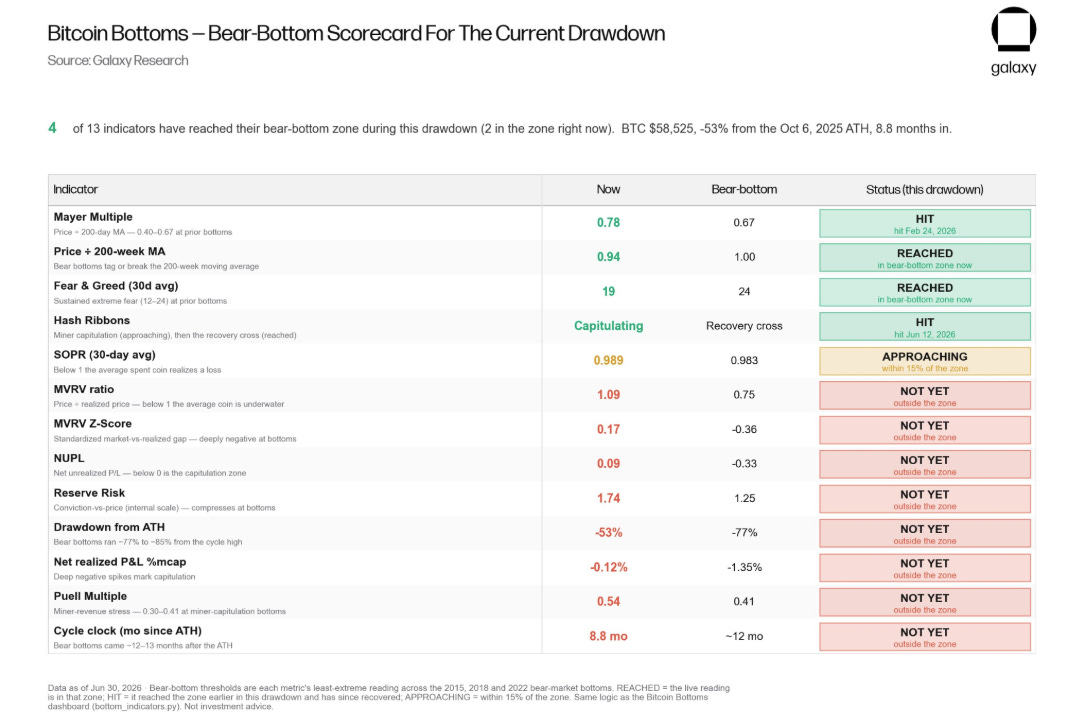
Galaxy scorecard fits that interpretation. Four of the thirteen bear-bottom indicators have now reached their bear-market zones, with two still sitting there. That is not a full capitulation signature, but it is enough to say the market is no longer obviously expensive on cycle metrics. The right read, in our view, is not “all clear”; it is that downside asymmetry is improving while uncertainty remains unresolved.
Relative value is also getting more interesting. One of the clearest themes through June was that crypto was not just fighting its own internal liquidation story; it was competing for capital against the AI complex. At the start of last week, U.S. investors were already questioning the sustainability of AI spending, while semiconductor and other AI-linked stocks fell on Wall Street mid-week as investors rotated into financials and healthcare.
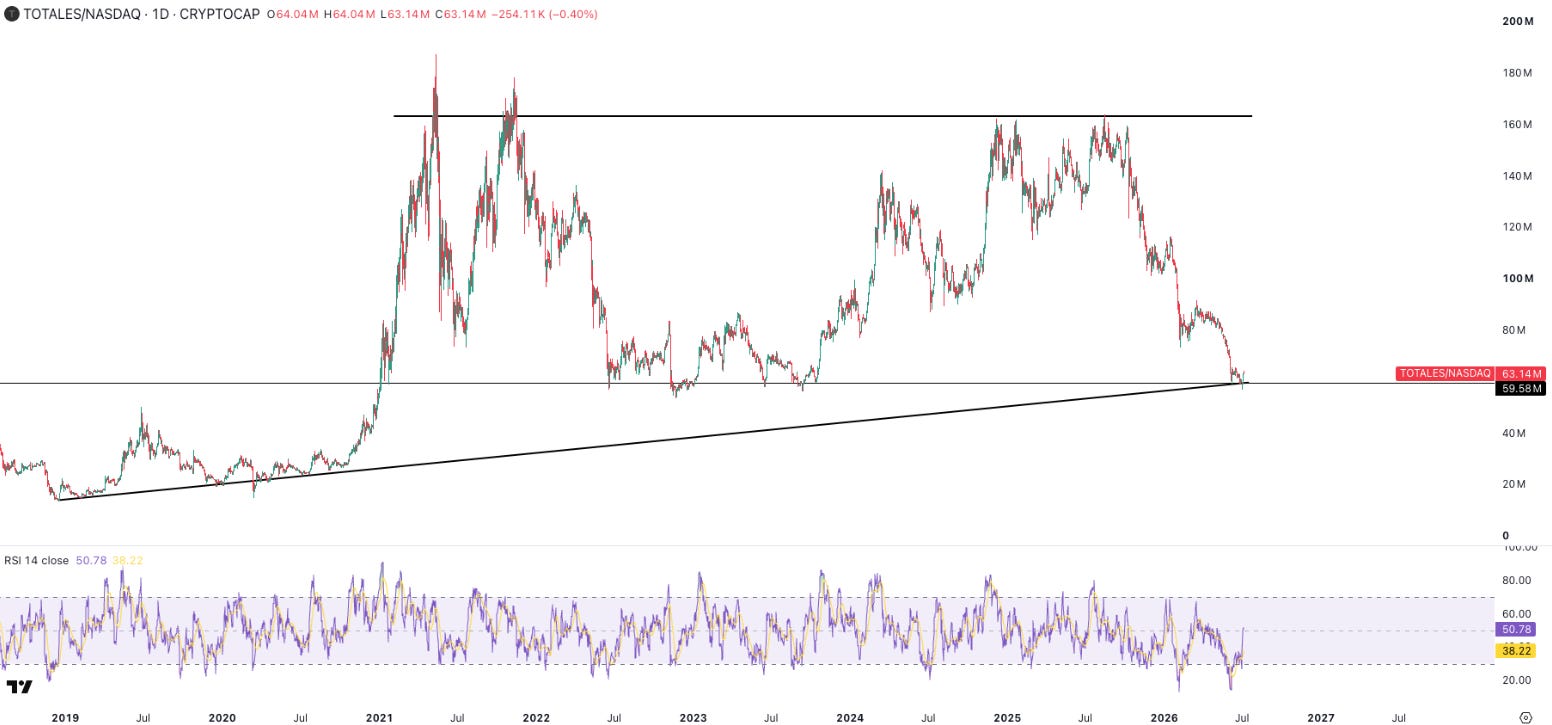
That is exactly why the TOTALES (total market cap ex-stables) / Nasdaq ratio matters here. The ratio is testing a structural support zone rather than breaking cleanly through it. If the AI/momentum leadership continues to wobble at the margin while crypto stops leaking flows, the asymmetry in that ratio improves quickly. It is not yet a trigger, but it is no longer just a theoretical conversation. Crypto does not need AI to collapse; it only needs the market to stop treating AI as the only destination for risk capital.
Macro
Macro remains on top of the stack. The single most important development this week was the June U.S. jobs report. The Bureau of Labor Statistics reported payroll growth of just 57,000, well below consensus expectations around 110,000. April and May were revised lower by a combined 74,000. The unemployment rate was 4.2%, but that was flattered by a sharp drop in labour-force participation to 61.5%, the lowest in more than five years. Average hourly earnings rose 0.3% month on month and 3.5% year on year. That is not a collapse, but it is a meaningful cooling in labour momentum and not the sort of report that screams for an urgent rate hike.
The complication is that inflation still looked sticky coming into the week. The Fed’s preferred price gauge showed headline PCE inflation at 4.1% in May and core PCE at 3.4%, both still well above target. That sticky inflation print was the reason the market had spent late June leaning hawkish again.
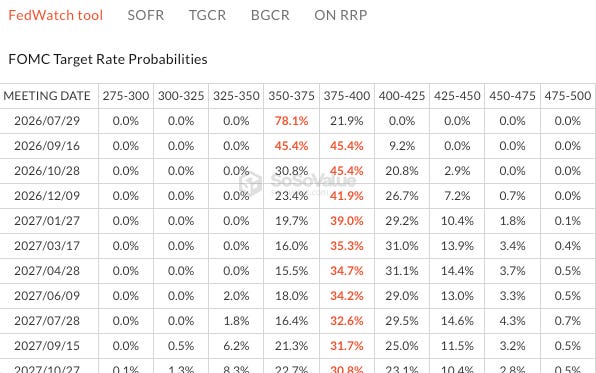
But the jobs report changed the tone materially. After payrolls, markets cut the perceived chance of a July hike to below 20% and reduced September hike odds to a coinflip while still keeping one hike somewhere later in 2026 alive in the curve. That is a crucial distinction. The market is no longer confidently pricing a hawkish Fed; it is pricing a Fed that might still want to threaten one.
The other key macro release came through energy. Oil rolled over hard as the week progressed. Brent settling sub $72 on 1 July, the lowest closes since March, as U.S.-Iran talks eased supply concerns and the reopening in Hormuz progressed faster than feared. OPEC+ approved another August quota increase as prices had fallen back towards pre-war levels around $72. If June’s hawkish repricing was partly an energy story, then July has begun by pulling one of those pillars away.
That leaves the Fed in a trickier position than rate markets implied even a week ago. A central bank facing 57,000 payroll growth, softer wages than feared, falling oil and still-tight but not obviously re-accelerating inflation has much less reason to rush. Reuters’ market commentary after payrolls captured the point neatly: policymakers now have less impetus to raise rates, and at least some investors are beginning to argue that there may be no hike at all this year. That feels directionally right. The market may still be too aggressive in pricing hikes that never get delivered.
Bottom line
The message this week is simpler than the volatility: crypto needed a bounce, and it got one. But the bounce arrived before the market has fully repaired the two things that matter most: flows and overhangs. ETF demand remains fragile, Strategy remains unresolved, and the macro backdrop has improved enough to help but not enough to declare victory.
Still, the setup is better than it was. On-chain accumulation has improved. More BTC is now held at a loss than at a profit, which historically has mattered. AI leadership has started to wobble just as crypto relative value is approaching major support. Oil is down, payrolls are softer, and rate-hike conviction has faded. That is enough for a relief rally, and perhaps enough for a local low to keep forming. It is not yet enough, in our view, for a durable all-clear.
July is still a seasonally strong month for the Nasdaq, but momentum itself often struggles even when the broader index does fine. If that seasonal pattern holds, then the path of least resistance may be one where leadership broadens, AI cools at the margin rather than collapses, and crypto gets room to mean-revert from an oversold, flow-starved position. That is the constructive case. The cautious case is that one green week is still only one green week. Both can be true at once.